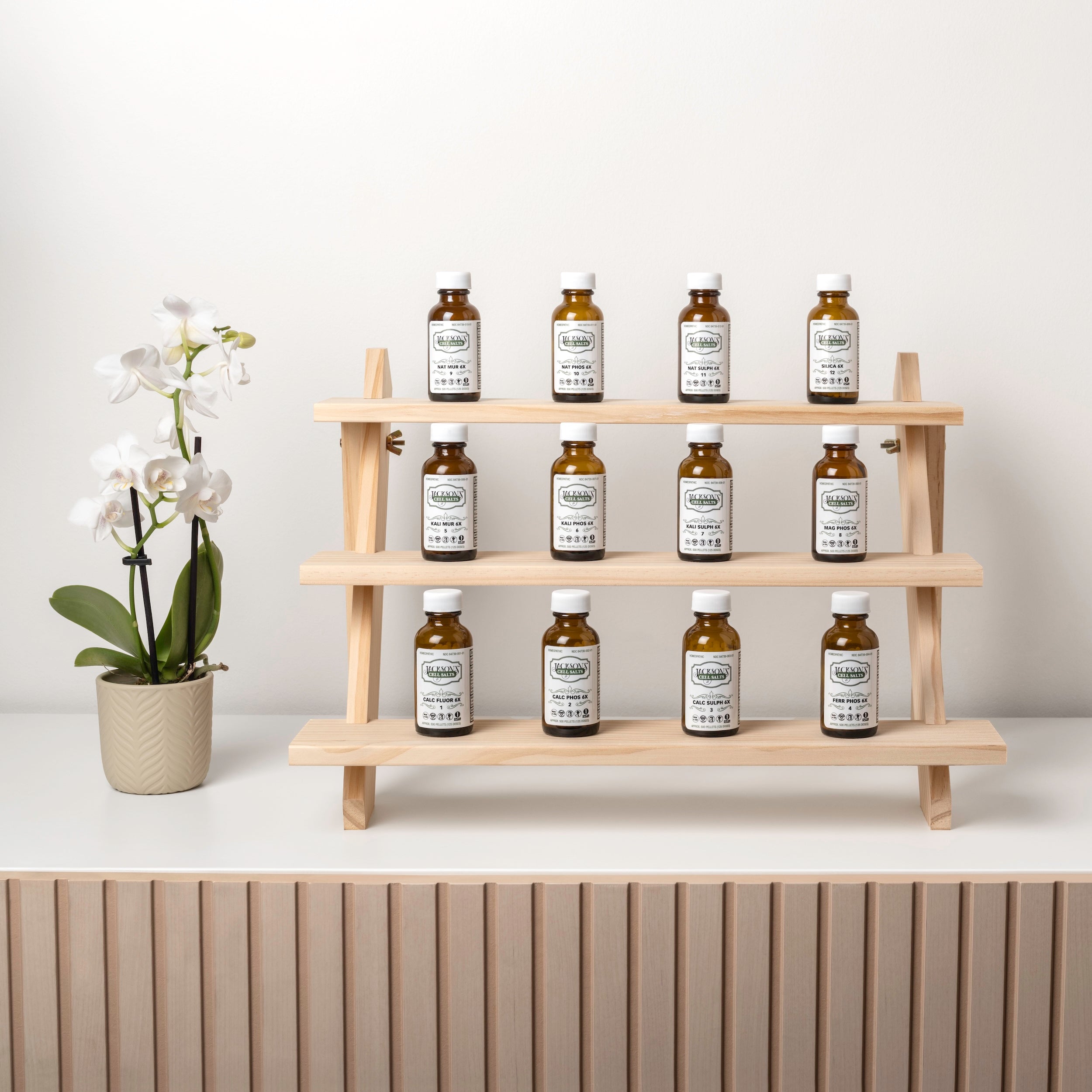
Pourquoi certains granules de sels cellulaires Jackson's Naturals ont-ils une apparence différente ?
Au cours de l'année écoulée, certains clients ont remarqué des différences dans l'apparence de nos granules de sels cellulaires entre les lots de produits. Les observations courantes incluent :
- Certains granules semblent d'un blanc plus éclatant tandis que d'autres paraissent plus translucides
- Certains granules se dissolvent de manière légèrement différente
- Les flacons semblent plus ou moins remplis
- Des différences d'étiquetage
Nous comprenons parfaitement pourquoi ces différences sautent aux yeux, en particulier pour les clients de longue date qui se sont habitués à une certaine apparence au fil des années.
La bonne nouvelle est que ces différences sont attendues et ne reflètent aucun changement dans la dynamisation, la préparation ou le dosage des granules.
Cet article explique pourquoi ces différences existent.
Deux types de granules différents
Les sels cellulaires Jackson's Naturals sont préparés avec de petits granules de saccharose, qui servent de support à la préparation minérale.
Selon le lot de production et le lieu de fabrication, nous avons historiquement utilisé deux types de granules :
1. Granules de saccharose à base de canne
Ces granules sont généralement :
- d'un blanc plus éclatant
- légèrement plus tendres
- à dissolution plus rapide
2. Granules de saccharose à base de betterave
Ces granules sont généralement :
- plus translucides ou « vitreux »
- légèrement plus denses et plus fermes
- d'un diamètre légèrement plus petit
- à dissolution plus lente
Les deux types de granules sont :
- certifiés végétaliens
- sans lactose
- préparés conformément aux normes de l'HPUS
La préparation active du sel cellulaire elle-même reste la même quel que soit le type de granule.
Pourquoi sont-ils différents à l'œil ou au toucher ?
Bien que le sucre de betterave et le sucre de canne soient chimiquement le même composé (saccharose), les deux sources de saccharose peuvent se comporter de manière quelque peu différente lors de la fabrication des granules en raison de petites différences dans la teneur en oligo-éléments, la gestion de l'humidité et la compressibilité.
- plus denses
- plus lisses
- légèrement plus translucides
Différences d'étiquetage
Une autre question que nous recevons concerne les différences d'étiquetage.
Jackson’s Naturals est une entreprise canadienne, mais nous vendons nos produits à l'international, principalement au Canada et aux États-Unis. Historiquement, nous avons fabriqué des sels cellulaires au Canada et aux États-Unis.
Selon l'endroit où le produit a été fabriqué et le marché auquel il était destiné, différentes exigences réglementaires en matière d'emballage s'appliquaient.
Produits pour le marché américain
Les produits fabriqués aux États-Unis pour le marché américain suivent les directives de la FDA et incluent donc :
- un panneau « Drug Facts » (informations sur le médicament)
- un formatage conforme à la FDA
Produits pour le marché canadien
Les produits canadiens suivent plutôt les exigences de Santé Canada, qui impliquent :
- un étiquetage bilingue
- des règles de formatage différentes
- des normes d'emballage différentes
En général, les clients situés en dehors du Canada et des États-Unis qui commandent via notre site Web recevront des produits emballés et étiquetés selon les normes canadiennes.
Il est également tout à fait normal pour les clients d'une autre région de recevoir occasionnellement un produit avec un format d'étiquetage différent de celui attendu. Cela est généralement dû à l'existence de stocks provenant de lots de production antérieurs encore présents dans les circuits de distribution pendant notre transition de fabrication. Cependant, c'est une situation qui deviendra moins fréquente à l'avenir.
Régionalisation et future fabrication
À l'avenir, Jackson’s Naturals s'orientera de plus en plus vers des chaînes d'approvisionnement régionalisées. En d'autres termes :
- les produits vendus aux États-Unis seront de plus en plus fabriqués aux États-Unis
- les produits vendus au Canada seront de plus en plus fabriqués au Canada
Cette transition repose sur plusieurs raisons :
- l'évolution des frais et réglementations d'importation
- les délais de douane et d'expédition
- une meilleure stabilité de la chaîne d'approvisionnement
- une réduction des délais entre les lots de production
Réflexions finales
Nous apprécions toujours que nos clients nous contactent avec des questions réfléchies, et nous sommes heureux de continuer à assurer la transparence sur la façon dont nos produits sont fabriqués.
Si vous avez d'autres questions, n'hésitez pas à nous contacter à tout moment via la page de contact de notre site Web.